
Preparing Your Log Home For Spring
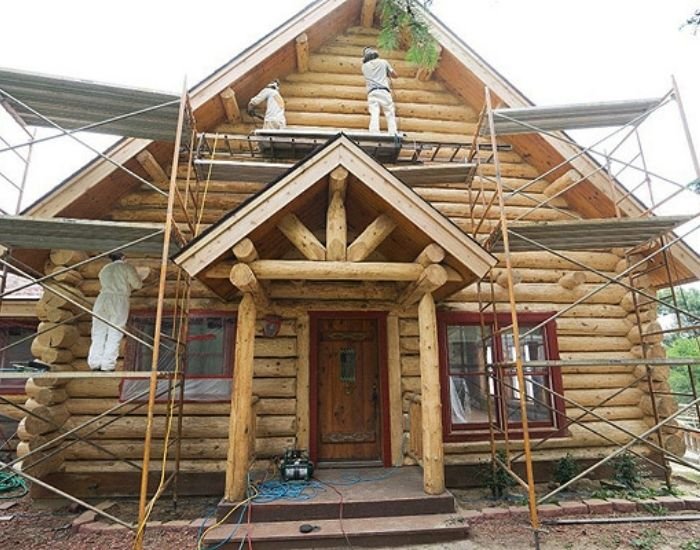
Preparing Your Log Home for Spring | 7 Essential Tips | Your log home expert
What are the top three log home maintenance duties I should tackle after a tough winter?
Three areas that require attention when winter fades are log walls, your HVAC system and gutters and downspouts. When spring arrives, your log walls might have endured months of freezing and thawing or prolonged periods of rain and cold, which all take a toll on wood and seals. Log home maintenance in Bailey, CO is especially important as the weather can wear protective coatings away quickly. Gutters and downspouts, key to maintaining a dry basement, might have been clogged with ice, snow and leaves for several weeks. Finally, as the season changes, it’s important to inspect your HVAC system and prepare it for another season of comfort in your home.
As soon as the weather begins to warm, give the exterior of your home a careful inspection. Look for darkened areas of wood, which typically translates to a worn or compromised preservative (I address this issue in the next question). Check caulk and chinking joints between logs and around windows and doors for areas that may have torn loose or stretched during the chilly months. If you practice regular spring and fall maintenance, you’ll have just a few wood touch ups.
It’s important that water be able to move quickly off your roof and away from your foundation, so don’t neglect your gutters and downspouts. I’d use a garden hose to wash away winter debris. Old brooms also work well. If you need a ladder to get onto a steeply pitched roof, be careful! Anchor the ladder and use safety ropes if necessary. If your home has gutter guards, make sure that they’ve done their job. Inspect ice melting system if you have one and if one is needed install one along with ice gems.
Of course, you can’t forget your home’s workhorse: the HVAC. Before next winter have the system checked for proper freeze protection, cleaned and inspected. In some cases, you may wish to reverse the rotation of ceiling fans for summer time.
My logs took a beating this winter from snow and ice storms. I want to clean them and perhaps even re-stain. What initial steps should I take?
Logs exposed to winter’s wrath can take a real beating. Look for discoloration in the logs. If you see areas that seem darker than they should be, spray them with a garden hose. If they darken further, your preservative coating needs a touch up. Water on well-treated log should bead or run down the surface. Dark streaks indicate that the wood is absorbing water, something you want to stop immediately.
If areas are seriously discolored or exposed to frequent wetting, rot might have begun. Holding a nail with your finger on the head like it’s a syringe, try to press it into suspicious wood. If the nail penetrates easily, the wood has started to rot and needs immediate attention. Logs just above ground level or low enough to be kept damp from melting snow or rainwater are most susceptible to rot. Inspect them closely.
Treating wood rot requires a two-pronged approach—stop the rot from spreading, and address the condition that caused the rot in the first place. Depending on severity, you might simply treat the wood with a rot-preventing chemical. If the rot is more severe, you may need to remove the decayed wood and rebuild the area using an epoxy compound.
Next, deal with the source of the problem. Make sure there’s enough space between landscaping and log walls to allow air to circulate. Don’t let water splash onto the logs. This may mean installing flashing above the lowest log or adding a gutter to prevent runoff. If this isn’t something you can do, apply multiple coats of preservative.
We had a problem with carpenter bees last summer. How do I prevent them from reappearing this year?
Carpenter bees are about the same size as bumble bees but lack the fuzzy yellow abdomens. After drilling a perfectly round entrance hole about a 1/2-inch in diameter, they excavate chambers in the wood and lay their eggs. When the eggs hatch, the larvae live on food stored in the chambers by their mother. They then emerge as adults. All exposed wood is susceptible to carpenter bees—no matter what type of home you own.
Since carpenter bees like to return to familiar nesting areas, if you had a problem last year, you might have a larger problem this spring. If you notice the telltale 1/2-inch perfectly round holes in your logs or soffit, inject Drione dust, available from pest-control suppliers, and seal the opening with a cork. Drione has a residual effect that will kill both the nest female and the young bees. Treat logs and soffits with Cypermethrin to prevent new infestations. You’ll probably have to repeat this treatment several times during the spring.
I sealed my windows and doors before the winter. What are the best methods for preparing my windows and doors for the warmer months?
Modern windows and doors don’t need much special treatment to get ready for summer. If openings are well sealed, cleaning screens and making sure windows operate smoothly usually takes care of any maintenance.
We get terrible thunderstorms on our mountain, and they cause lots of erosion around my house. What are some ways to combat this?
Erosion problems usually crop up on newly finished homes where natural drainage patterns have been disturbed. Get a jump on erosion by establishing a lush turf or heavy groundcover around your home. In more severe cases, you might need to hire an excavator to re-shape grades so water can’t collect and gather enough speed to move soil.
Use splash blocks under all downspouts to avoid adding to the problem. You also might consider installing French drains—these gravel-or rock-filled pits collect water and either redirect it away from your home or let it seep slowly into the soil.
Swallows have been a problem in our area, as they damaged some homes. What preventative measures can I take to keep them away?
When it comes to birds, prevention is the best medicine. But keep in mind that some remedies are actually illegal because a range of birds are federally protected. Swallows are a classic example, so harming them or destroying their nests is prohibited. The solution? Convince the swallows that there are better places than your eaves to nest.
Study the area where birds have built nests before, then try to see what might attract them to that spot. It might be a narrow ledge or a slight recess. Cover the area with hardware cloth or mesh early in the year before they arrive. In some cases you might need to drape netting from the edge of your eaves back to the walls. Without access to their favorite nesting spot, the birds should move on. Some people have reported success with ultrasonic devices that plug into an outlet. If the birds are using a food or water source nearby, consider removing it.
What should I keep in mind when it comes to landscaping and its relationship to my log home?
There are a few special considerations. Be sure shrubs are placed far enough from your log walls, which allows air to circulate and keeps leaves from brushing against the wood. Set walking stones and sidewalks several feet away from your home to keep rainwater from soaking the wood. Steer clear of climbing plants such as ivy and honeysuckle. These plants grow rapidly and, when attached to logs, can quickly damage the preservative coatings and start rot.
If you maintain your log home regularly, spring maintenance might mean a little sweat equity on a Saturday or a single weekend. That’s all it will take to put your home in shape for the balmy days ahead—that is, until you feel that familiar bite in the air announcing the arrival of fall.
Log-Home Maintenance Checklist
Keep your log home in excellent condition by following this maintenance checklist.
The key to keeping your logs in tip-top shape is routine inspections. So, schedule some time to walk around your log home, at least every fall and spring, to check up on the condition of your logs. During these inspections, use the following checklist to make sure you’re covering all of the areas of concern.
Mold/Mildew
Possible causes:
- Sprinklers wetting your logs
- Gutters leaking (or no gutters at all)
- Spigots dripping or spraying the logs when the hose is in use
- Splash back from downspouts
- High humidity due to your geographic area
- Greenery too close to the home, holding water in
- Logs uncoated? (Uncoated logs collect mold and mildew easier)
Solution:
First, adjust or move any hoses or sprinklers that may be wetting your logs on a regular basis. Also, install or repair gutters to keep water from running down your logs. Trim bushes and trees back from the home at least 18 inches. And finally, make sure to periodically clean your logs with appropriate treatments or a power washer.
Fading Stain
Possible causes:
- UV degradation
Solution:
Clean your logs before applying a new coat of compatible stain. Also, consider more permanent protective measures like incorporating shade trees into your landscape, building porches and opting for wide roof overhangs.
Peeling Stain
Possible causes:
- Logs weren’t cleaned prior to staining, resulting in peeling stain
- Water entering checks (or cracks)
Solution:
For this problem, you can either treat each specific area as it occurs, or start from scratch and re-apply a whole new stain. If you see checks, look to see if they’re large enough to be filled with caulk, which will seal them and keep water from seeping under the protective coating.
Chinking/Caulking Pulling Away
Possible causes:
- Applied to an incompatible stain surface
- Logs not cleaned prior to application
- Not tooled properly
- High percentage of log shrinkage/movement
- No backer rod or bond breaker installed
Solution:
Remove the chinking where it’s no longer adhering to the logs, clean the logs, and reapply new chinking. If no bond breaker was installed during the first application, install backer rod prior to applying the chinking, which will help with adhesion in the future and keep the chinking/caulking from tearing.
Insects
Possible causes:
- The cause depends on the type of insect you’re dealing with, as some are nesting and some are feeding on your wood.
Solution:
Feeding insects (carpenter ants, termites, post powder beetles) can be treated with borate products if there is no coating on the logs. Insecticide additives can be used to help ward off nesting insects.
For more information or for help with your project please contact Sinrom Inc. 970-389-2501