Believe us, step onto a tile bathroom floor in Bailey at 6 a.m. in January, and you’ll get the appeal.
Radiant floor heating in Colorado is one of those quality-of-life improvements you don’t know you need until you’ve tried it, and one of our best hitters here at Sinrom Construction.
If you’ve already made up your mind and you’re looking for a contractor, call us at 970-389-2501. If you still need some convincing, just keep reading.
Most homes fix the cold problem by heating up the air, which works fine until you have allergies, a draft, or lose power. Radiant floor heating works differently. It warms the floor, and the floor warms everything else.
There are two types of in-floor heating in Colorado. Hydronic and electric.
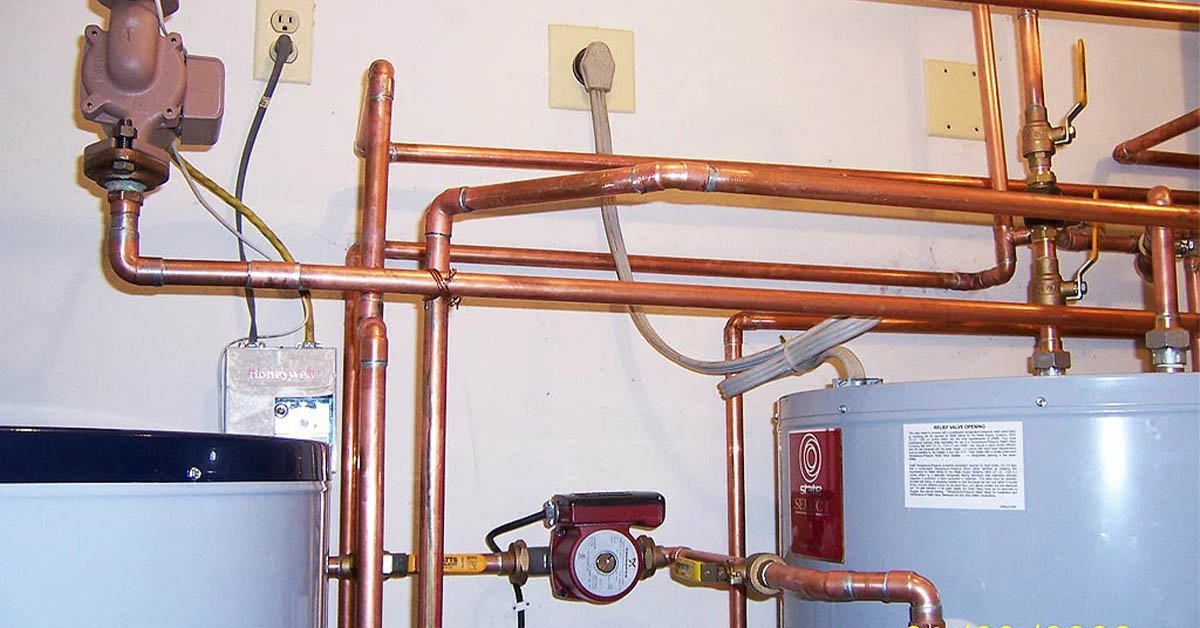
Hydronic radiant floor heating in Colorado works by running warm water from a boiler through tubing under the floor. Electric mats heat resistance cables installed under the tiles.
Radiant floor heating in Colorado is worth it because the heat starts at the floor and stays there. You can install it throughout the house and even in your driveway, and it often works with what you already have.
After all, boilers are common, so if you’re looking for hydronic heating in Bailey, Conifer, or any other mountain town, you already have what you need to get started.
Bare feet on a warm bathroom floor, no furnace kicking on and off, no cold spots where the hot air doesn’t reach, or rooms that are frozen while the rest of the house is habitable.
Radiant floor heating in a Colorado mountain home means steady warmth through long winters, reliable temperatures, and comfort no other heating system can beat.
Yes, radiant floor heating in Evergreen, Conifer, Morrison, and just about all of Colorado is great for mountain homes, but we’ll be the first to tell you it does come with some drawbacks.
It’s slow, for one, and it’s not particularly versatile. It heats, and that’s about it, but it heats better than any other kind of heater you’ll find out there.
Radiant floor heating is efficient in cold climates; you just have to plan for it. Set up the controls so that it starts heating up before you get to your mountain home, and you won’t want any other kind of radiant floor heating from Conifer to Alaska.
The cost of radiant floor heating depends on how much area you want to cover, and when you want to cover it.
If you want it cheaper, get it during construction. That way, you can put in the tubing, insulation, and flooring along with everything else.
Want to install it in an existing house? Then we’re talking retrofit. We either lift your floors or find a way to install things from underneath; neither is cheap or easy, and that’s reflected in the price.
Best middle ground? During renovations, especially if you plan to change the floors.
From there, the price follows the square footage, the number of zones, and whether your current boiler can handle it. Radiant floor heating in Bailey, CO, where parts of town sit above 8,000 feet, needs equipment rated for that altitude, and that impacts the price.
Hydronic radiant heating isn’t expensive to run, not really. The running costs come down to fuel, insulation, and the design. The real investment is the installation.
At Sinrom Construction, LLC, we’ve been building and heating mountain homes since 1999, and radiant heat is one of our favorites. Our owner, Costin Stanescu, is factory-trained on Navien, Buderus, and Viessmann boilers, and he knows how to plan the floor and the boiler as one system instead of hoping they get along.
Building new, planning a remodel, or just wondering if your house is a good fit? Whether you need radiant floor heating in Pine, CO, Bailey, Evergreen, or anywhere else in the foothills, call us at (970) 389-2501 or request a free estimate.
We’ll come take a look and give you a straight answer.
Tell us about your mountain home heating project.
Sinrom Contruciton LLC
We firmly believe that the internet should be available and accessible to anyone, and are committed to providing a website that is accessible to the widest possible audience, regardless of circumstance and ability.
To fulfill this, we aim to adhere as strictly as possible to the World Wide Web Consortium’s (W3C) Web Content Accessibility Guidelines 2.1 (WCAG 2.1) at the AA level. These guidelines explain how to make web content accessible to people with a wide array of disabilities. Complying with those guidelines helps us ensure that the website is accessible to all people: blind people, people with motor impairments, visual impairment, cognitive disabilities, and more.
This website utilizes various technologies that are meant to make it as accessible as possible at all times. We utilize an accessibility interface that allows persons with specific disabilities to adjust the website’s UI (user interface) and design it to their personal needs.
Additionally, the website utilizes an AI-based application that runs in the background and optimizes its accessibility level constantly. This application remediates the website’s HTML, adapts Its functionality and behavior for screen-readers used by the blind users, and for keyboard functions used by individuals with motor impairments.
If you’ve found a malfunction or have ideas for improvement, we’ll be happy to hear from you. You can reach out to the website’s operators by using the following email
Our website implements the ARIA attributes (Accessible Rich Internet Applications) technique, alongside various different behavioral changes, to ensure blind users visiting with screen-readers are able to read, comprehend, and enjoy the website’s functions. As soon as a user with a screen-reader enters your site, they immediately receive a prompt to enter the Screen-Reader Profile so they can browse and operate your site effectively. Here’s how our website covers some of the most important screen-reader requirements, alongside console screenshots of code examples:
Screen-reader optimization: we run a background process that learns the website’s components from top to bottom, to ensure ongoing compliance even when updating the website. In this process, we provide screen-readers with meaningful data using the ARIA set of attributes. For example, we provide accurate form labels; descriptions for actionable icons (social media icons, search icons, cart icons, etc.); validation guidance for form inputs; element roles such as buttons, menus, modal dialogues (popups), and others. Additionally, the background process scans all the website’s images and provides an accurate and meaningful image-object-recognition-based description as an ALT (alternate text) tag for images that are not described. It will also extract texts that are embedded within the image, using an OCR (optical character recognition) technology. To turn on screen-reader adjustments at any time, users need only to press the Alt+1 keyboard combination. Screen-reader users also get automatic announcements to turn the Screen-reader mode on as soon as they enter the website.
These adjustments are compatible with all popular screen readers, including JAWS and NVDA.
Keyboard navigation optimization: The background process also adjusts the website’s HTML, and adds various behaviors using JavaScript code to make the website operable by the keyboard. This includes the ability to navigate the website using the Tab and Shift+Tab keys, operate dropdowns with the arrow keys, close them with Esc, trigger buttons and links using the Enter key, navigate between radio and checkbox elements using the arrow keys, and fill them in with the Spacebar or Enter key.Additionally, keyboard users will find quick-navigation and content-skip menus, available at any time by clicking Alt+1, or as the first elements of the site while navigating with the keyboard. The background process also handles triggered popups by moving the keyboard focus towards them as soon as they appear, and not allow the focus drift outside it.
Users can also use shortcuts such as “M” (menus), “H” (headings), “F” (forms), “B” (buttons), and “G” (graphics) to jump to specific elements.
We aim to support the widest array of browsers and assistive technologies as possible, so our users can choose the best fitting tools for them, with as few limitations as possible. Therefore, we have worked very hard to be able to support all major systems that comprise over 95% of the user market share including Google Chrome, Mozilla Firefox, Apple Safari, Opera and Microsoft Edge, JAWS and NVDA (screen readers).
Despite our very best efforts to allow anybody to adjust the website to their needs. There may still be pages or sections that are not fully accessible, are in the process of becoming accessible, or are lacking an adequate technological solution to make them accessible. Still, we are continually improving our accessibility, adding, updating and improving its options and features, and developing and adopting new technologies. All this is meant to reach the optimal level of accessibility, following technological advancements. For any assistance, please reach out to